
Introduction: A Paradox in NHS Resource Management
The NHS stands as a beacon of equity, offering healthcare free at the point of delivery to all who are entitled. However, this core principle exists alongside a growing paradox: while the NHS remains committed to universal free healthcare, the practical realities of finite resources—be they hospital beds, staff hours, or diagnostic equipment—have created inefficiencies, delays, and strained services.
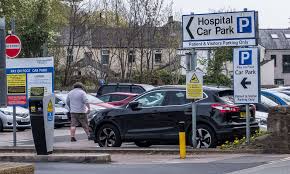
This paradox becomes starkly evident when compared to the NHS’s approach to ancillary services, such as hospital car parking. Here, scarcity is acknowledged and managed through financial mechanisms: users are charged for access, and penalties are imposed for overstaying, regardless of the circumstances. Meanwhile, the healthcare system itself refrains from similar methods of moderating demand, resulting in unmanageable queues, excessive strain on resources, and inequitable use of services.
This dichotomy invites critical reflection: if the NHS can charge for parking to manage demand and ensure fair access to limited spaces, why does it not adopt similar principles for healthcare services—where the stakes are far higher?
The Car Park as a Metaphor for NHS Challenges
The challenges of NHS resource management can be encapsulated in the experience of a hospital car park:
- Scarcity of Resources: A limited number of parking spaces mirrors the finite capacity of the NHS to provide appointments, s
 cans, and treatments.
 - Queues and Delays: Just as drivers circle endlessly, waiting for a parking space, patients endure lengthy waiting lists and repeated appointments due to fragmented and inefficient systems.
- Unmoderated Demand: In the car park, charging fees and imposing penalties reduces unnecessary use and incentivises efficiency. In healthcare, the absence of similar mechanisms means demand grows unchecked.
- Accountability and Awareness: Parking charges make users acutely aware of the cost of their stay. In contrast, NHS users have little visibility into the financial implications of their care, which can lead to overuse and inefficiencies.
The car park metaphor highlights a critical truth: resource scarcity requires proactive management, transparency, and accountability to ensure fair access for those in genuine need.
The Dichotomy of Demand Moderation
The NHS’s approach to parking reflects an acknowledgment that demand must be moderated to preserve equitable access. Yet this principle is not extended to healthcare services, where unchecked demand exacerbates the very scarcity it seeks to address. The result is a self-perpetuating cycle:
- Long queues and delays frustrate patients and lead to worse health outcomes.
- Fragmented care (e.g., multiple appointments for scans, consultations, and treatments) multiplies resource use.
- Ineligible users or medical tourists exploit the system, further straining limited resources.
This dichotomy reveals an opportunity to rethink how the NHS approaches resource management—one that balances its commitment to equity with the need for efficiency.
Proposed Solution: An Integrated Billing and Transparency System
To address these challenges, I propose the adoption of an integrated billing and transparency system for all NHS users. This system, inspired by the operational practices of private healthcare, would offer a fair, efficient, and equitable way to manage demand while protecting the NHS’s founding principles.
Key Features:
- Universal Check-In:
Upon arrival, all users would check in at reception, providing their NHS number or equivalent identification. The system would:- Verify eligibility for free healthcare.
- Record all services rendered during the visit.
- Itemised Billing:
At the end of the visit, users would receive an itemised bill detailing the costs incurred (e.g., consultations, scans, medications).- For eligible users, the full amount would be credited, resulting in a zero balance.
- This transparency would foster greater awareness of the true cost of NHS services, encouraging responsible use.
- Charges for Ineligible Users:
Users unable to demonstrate eligibility for free healthcare (e.g., foreign visitors) would:- Be asked to provide payment details or a deposit upon check-in.
- Receive a bill at the end of their visit, with the option to pay immediately or defer payment through debt collection mechanisms.
- Equity Safeguards:
- Urgent and emergency care would remain free for all, ensuring no one is denied treatment due to inability to pay.
- Exemptions or subsidies would be available for vulnerable populations.
- Data Integration:
The system would integrate with existing NHS databases, HMRC records, and immigration systems to streamline eligibility checks and minimise administrative burdens.
Anticipated Benefits
- Demand Moderation:
Transparency around the cost of services would encourage users to consider the necessity of their visits, reducing non-urgent demand and freeing resources for those in genuine need. - Improved Efficiency:
Tracking all services through a single system would reduce fragmentation, streamline care pathways, and minimise unnecessary repeat appointments. - Revenue Protection:
Charging ineligible users would recover costs that are currently absorbed by the NHS, preserving resources for UK taxpayers. - Cultural Shift:
By making users aware of the true costs of their care, the system fosters a sense of shared responsibility, encouraging patients to value NHS services and use them judiciously.
Conclusion
The NHS is a cornerstone of our society, but it faces increasing strain from unmoderated demand and finite resources. The paradox of charging for parking while providing free, unlimited healthcare highlights an opportunity to rethink how we manage these challenges. By adopting an integrated billing and transparency system, the NHS can:
- Preserve its commitment to equity.
- Ensure fair access to resources.
- Improve efficiency and accountability.
- Protect itself from misuse and financial strain.
This solution builds on existing technologies and practices, offering a practical, scalable way to address the NHS’s challenges without compromising its core values. I urge you to consider this proposal as a step toward a more sustainable and equitable healthcare system.
 Quintessence